
Introduction: Why Titanium Is the Premium Frame Material
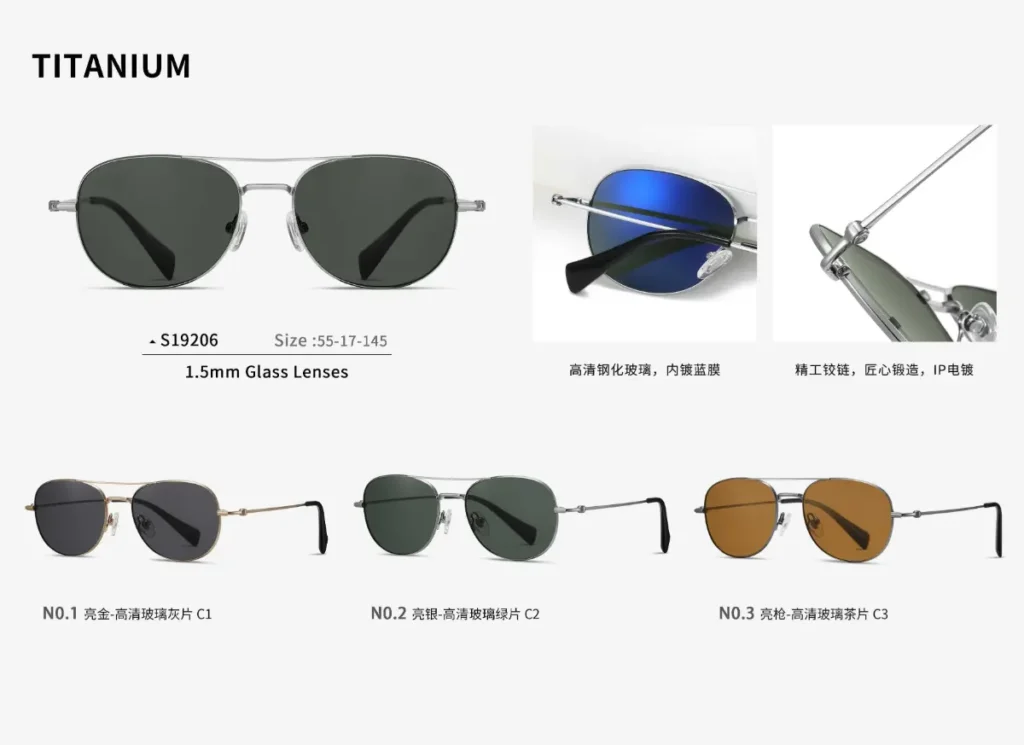
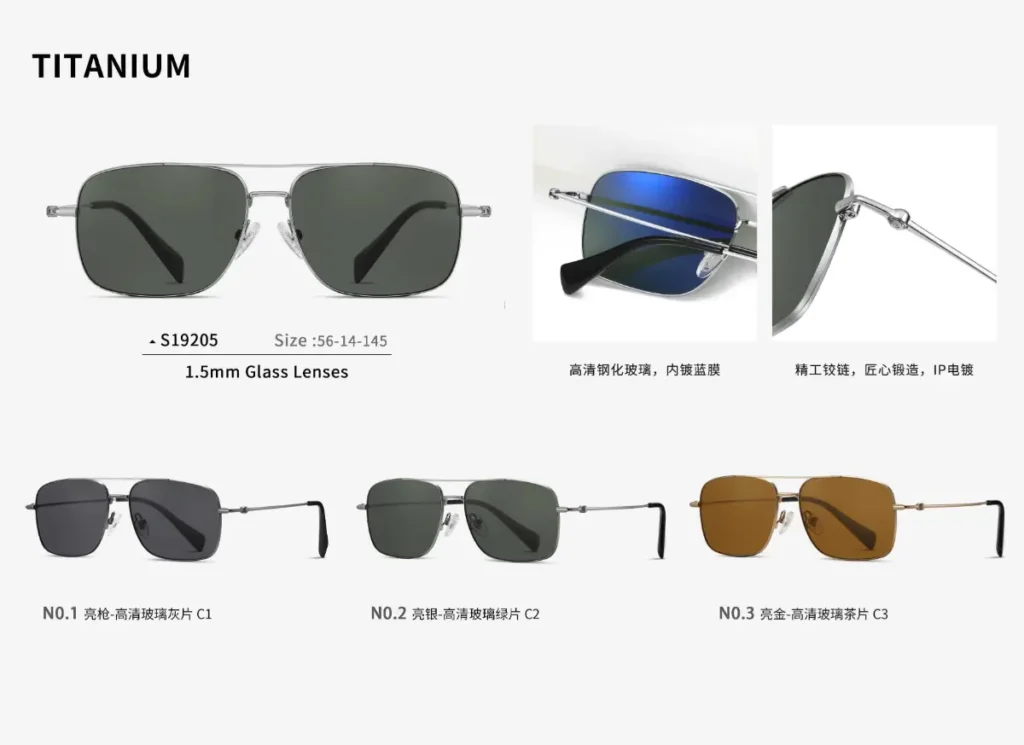
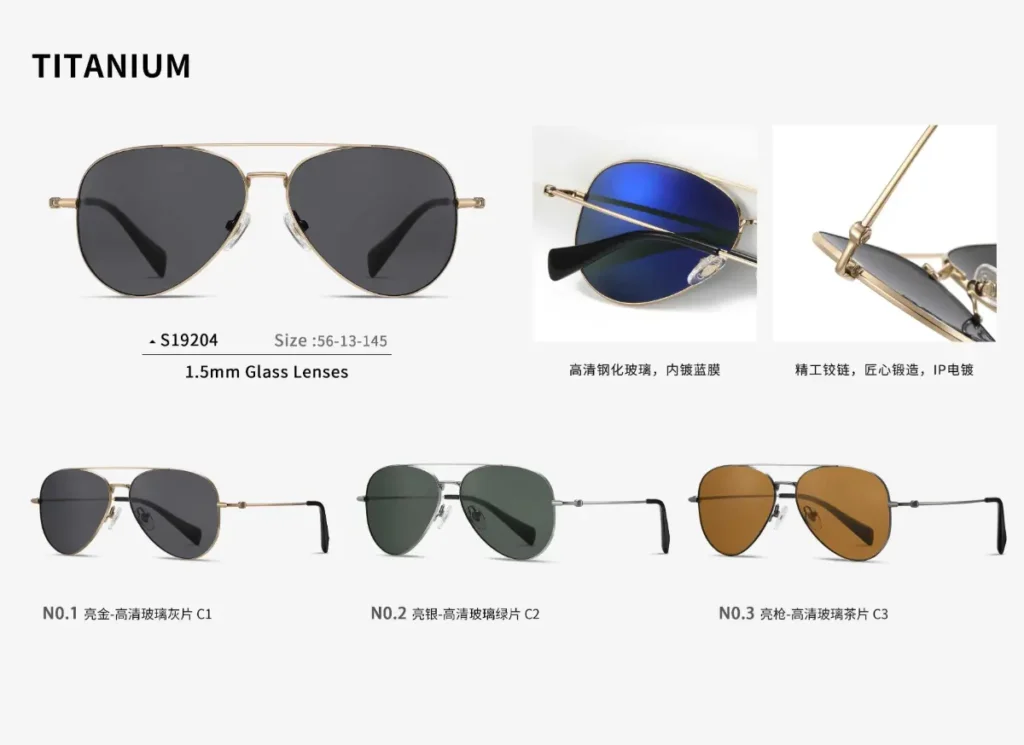
Titanium has earned its reputation as the gold standard of eyewear materials — and for good reason. At just 40% the weight of stainless steel with comparable strength, titanium delivers a wearing experience that no other material can match. It’s hypoallergenic, corrosion-resistant, and develops a distinctive patina over time that high-end consumers find deeply appealing.
The global titanium eyewear market has grown at 8-12% annually since 2020, driven by consumer willingness to pay premium prices for ultra-lightweight frames. But sourcing titanium frames from China requires specialized knowledge — the manufacturing process is fundamentally different from acetate or injection-molded production, and the supply chain for titanium raw materials is more concentrated and complex.
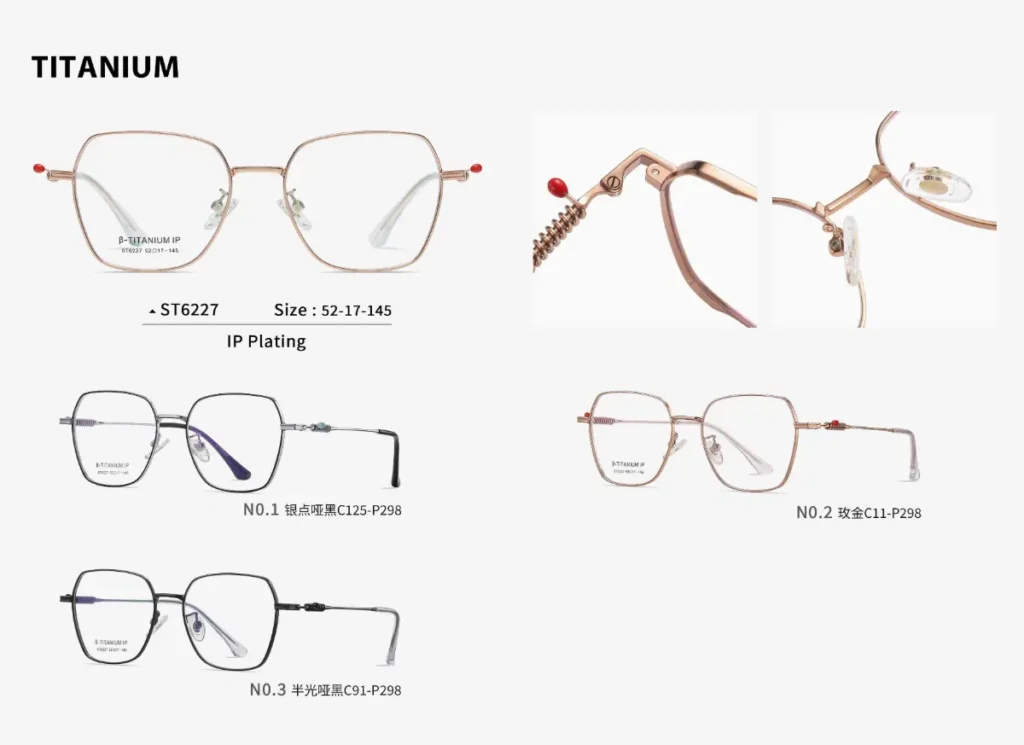
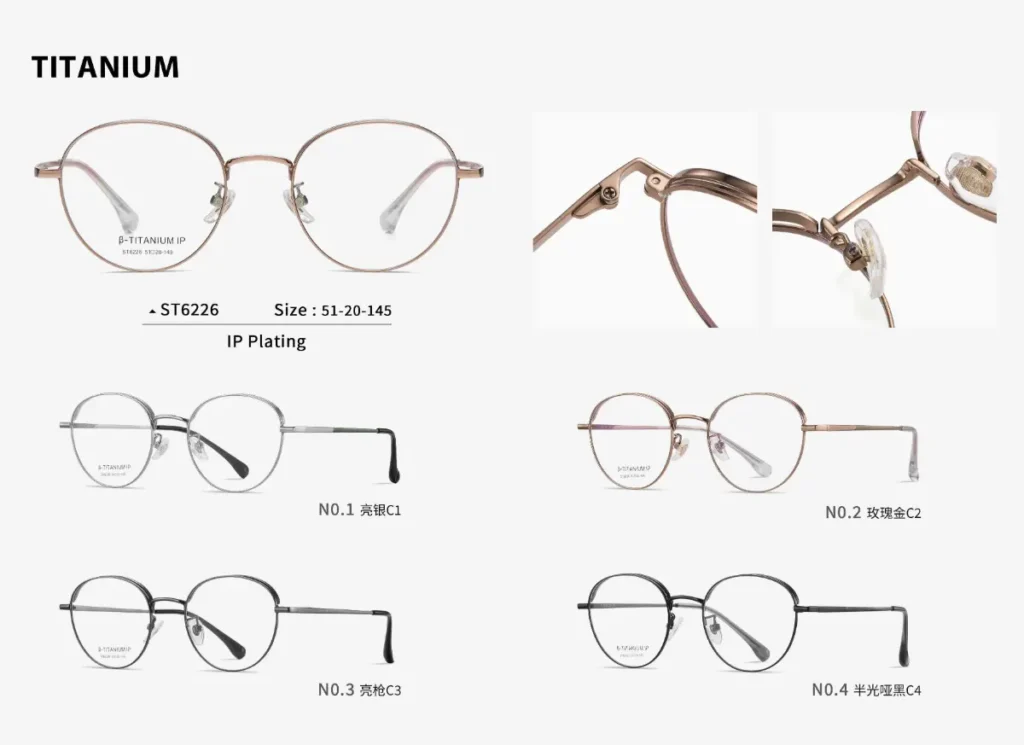
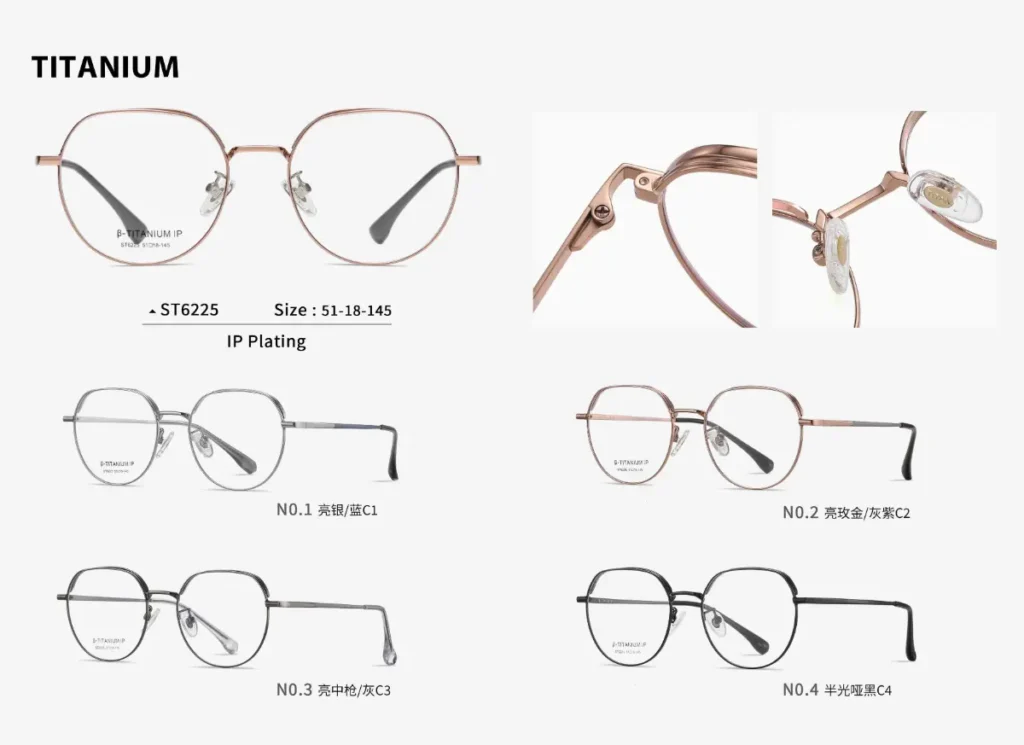
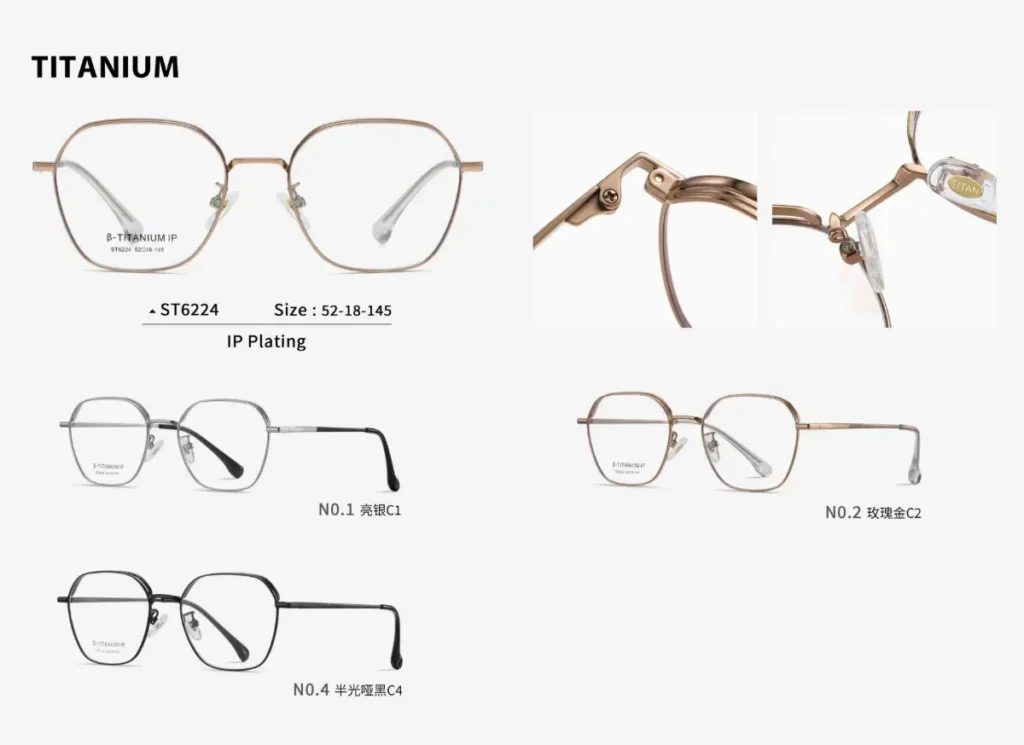
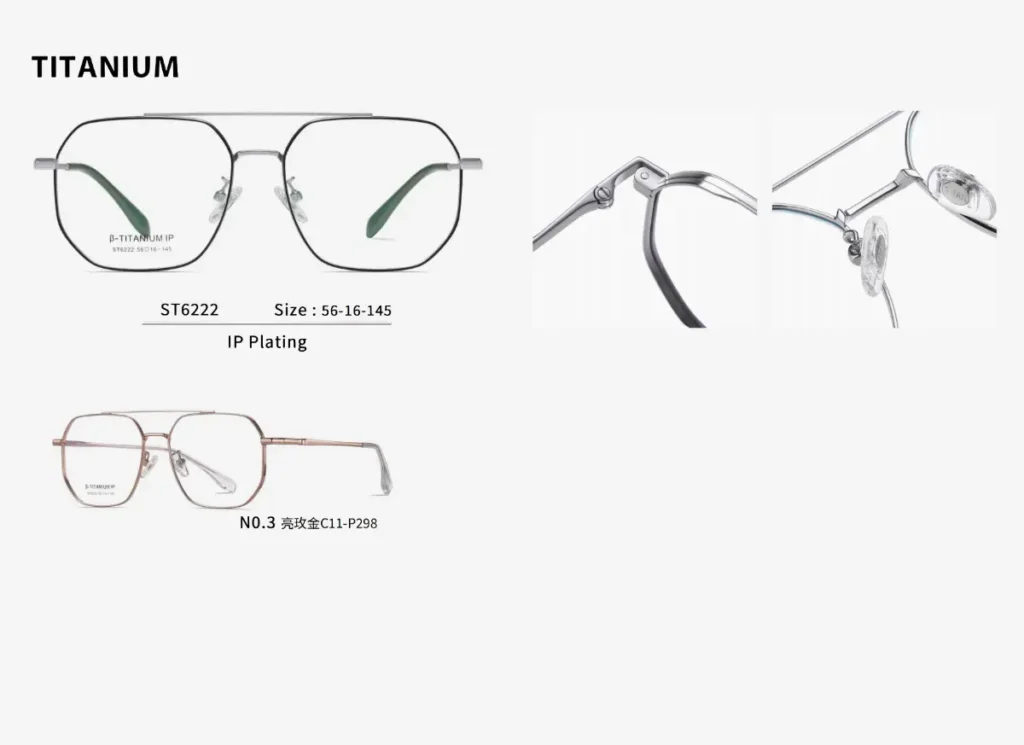
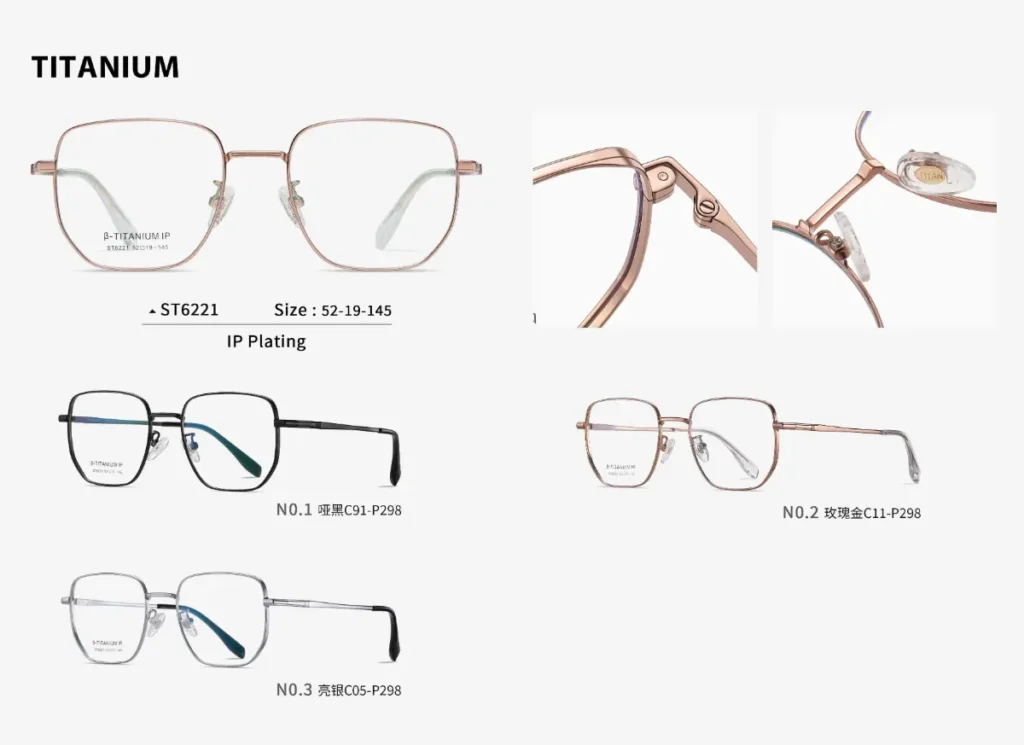
Types of Titanium Used in Eyewear
Pure Titanium (Grade 1 & Grade 2)
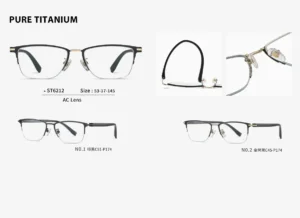
Pure titanium frames are the lightest option available, typically weighing 12-18 grams per pair. Grade 1 titanium is the softest and most formable, ideal for delicate wire-frame designs. Grade 2 offers slightly higher strength while maintaining excellent workability. Both grades are fully hypoallergenic — a critical selling point for consumers with metal sensitivities.
Beta-Titanium (Ti-3Al-2.5V)
Beta-titanium is an alloy containing approximately 3% aluminum and 2.5% vanadium. It’s more flexible than pure titanium, making it the preferred material for temple arms and bridge components that require spring-like elasticity. Most “memory metal” frames use beta-titanium for the flexible components. The material can be bent significantly and return to its original shape — a feature that dramatically reduces breakage rates in retail settings.
Titanium Memory Metal (Ni-Ti Alloy / Nitinol)
Nitinol (nickel-titanium alloy) offers extraordinary shape-memory properties. While technically a nickel-containing alloy, quality nitinol frames are processed to eliminate nickel release, making them safe for most consumers with nickel allergies. However, EU regulations (EN 16128) require rigorous nickel release testing for nitinol frames — a compliance detail that many first-time buyers overlook.
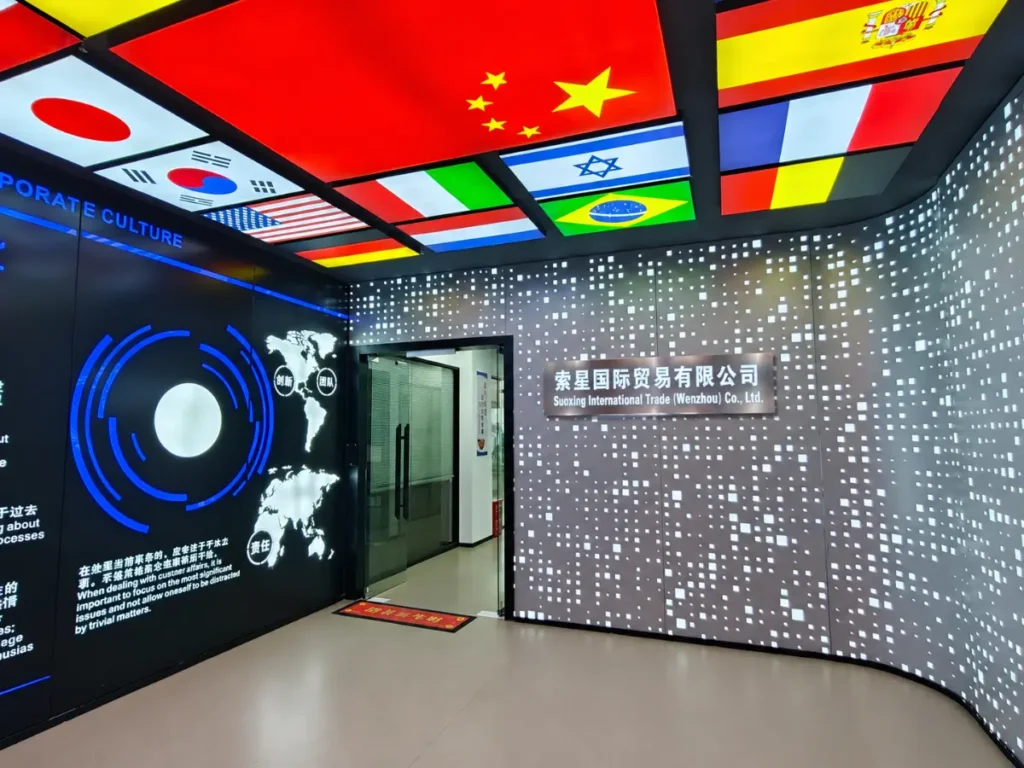
The Titanium Frame Manufacturing Process
Step 1: Wire Drawing & Sheet Rolling
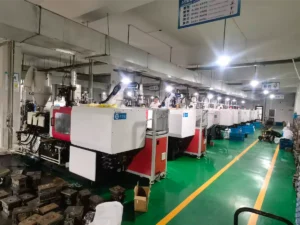
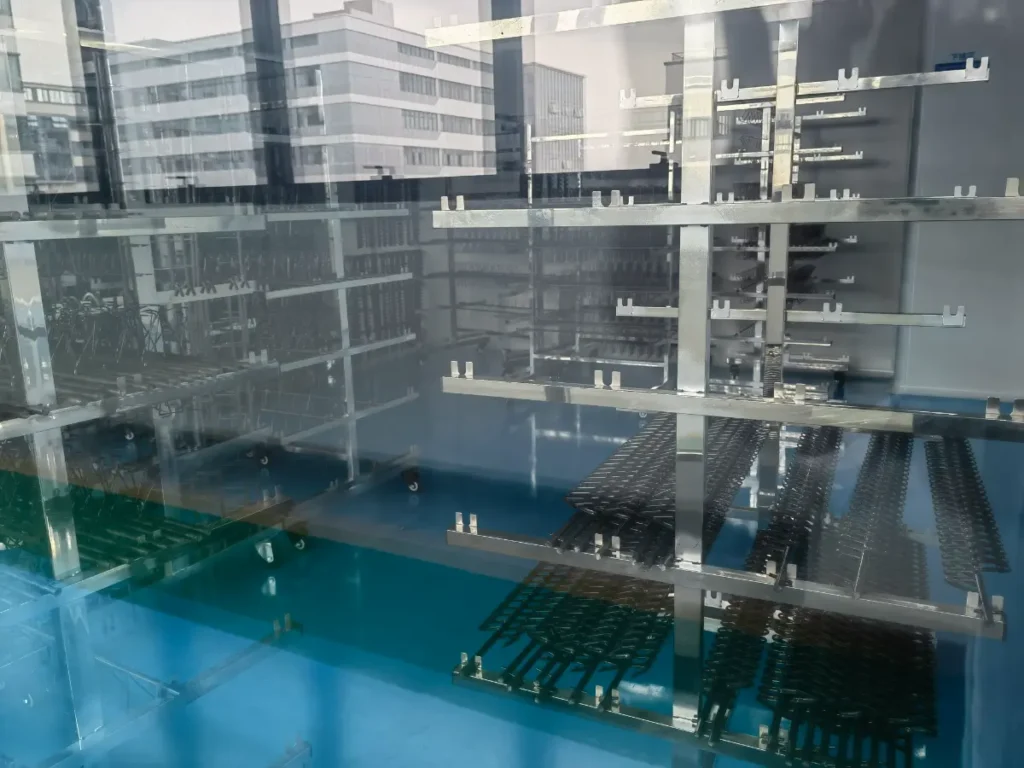
Unlike acetate frames that start from sheet stock, titanium frames begin as wire or strip material. Raw titanium rod is drawn through progressive dies to achieve the exact diameter needed for each frame component. This process requires specialized equipment and represents a significant capital investment — one reason titanium frame factories are less common than acetate factories.
Step 2: Precise Bending & Forming
Titanium’s spring-back characteristic makes it challenging to form. Unlike softer metals that retain their bent shape, titanium “wants” to return to its original position. Skilled operators use CNC bending machines with real-time angle compensation to achieve the precise frame geometry. Each bend requires overbending by 5-15 degrees to account for spring-back, and this compensation varies by alloy grade and wire diameter.
Step 3: Welding — The Critical Skill
Titanium welding is where most quality issues originate. Titanium reacts with oxygen at temperatures above 600°C, forming a brittle oxide layer that weakens weld joints. Proper titanium welding requires:
- Argon shielding: The weld zone must be flooded with argon gas to exclude oxygen
- Laser welding: Most high-quality titanium frames use laser welding for precision and minimal heat-affected zones
- Post-weld annealing: Controlled cooling to restore material properties at the weld joint
Visual indicators of poor titanium welding include discoloration at joints (blue/gold tints indicate oxygen contamination) and visible weld seams. Premium frames should show no visible weld marks — the joints should be seamless.
Step 4: Surface Treatment & Coloring
Titanium’s natural color is a silvery-gray, but the material can be anodized to produce a range of colors without paint or plating. The anodizing process uses controlled voltage to create oxide layers of varying thickness, which refract light at different wavelengths to produce color. Common titanium colors and their voltage ranges:
- Natural silver: No anodizing (0V)
- Gold: 25-30V
- Blue: 35-45V
- Purple: 55-65V
- Green: 75-85V
Unlike painted finishes, anodized colors will not chip, peel, or fade — they’re integral to the material surface. This is a significant durability advantage for frames that see daily wear.
Step 5: Assembly & Nose Pad Attachment
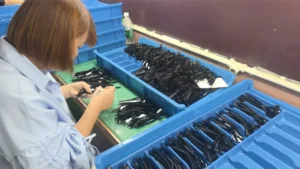
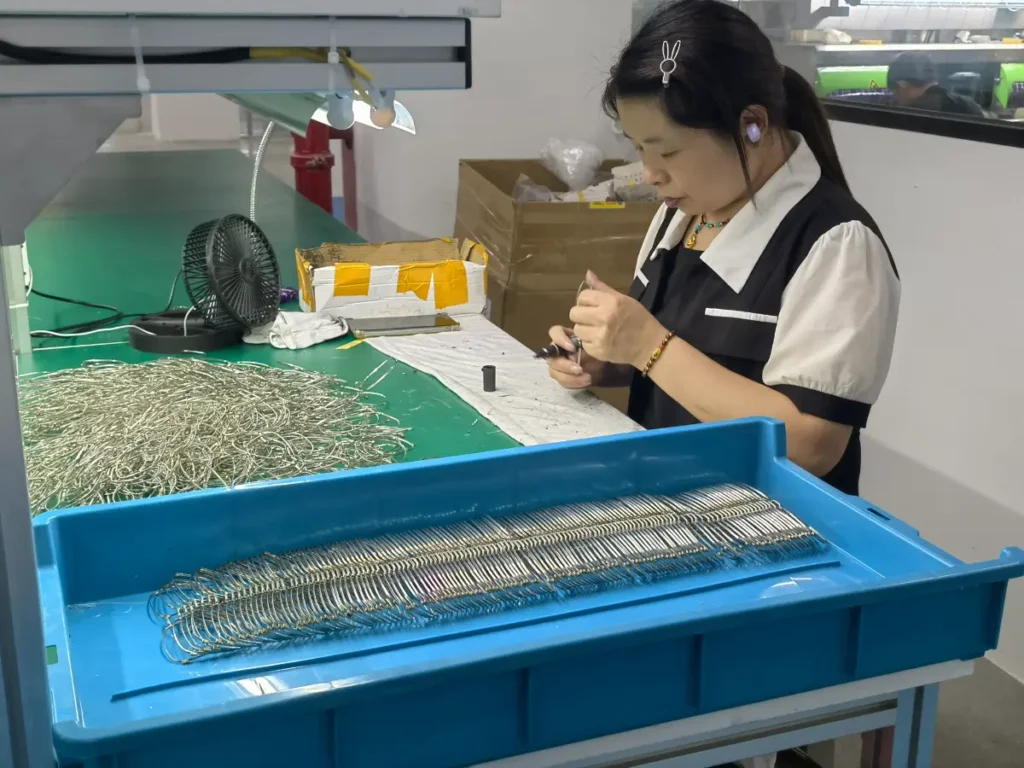
Titanium frames typically use welded or riveted nose pad arms rather than the screw-mounted pads common in acetate frames. The pad arms are formed from thin titanium wire and welded to the bridge. Silicone nose pads are then slipped over the wire tips. This construction is lighter and more durable than screw-mounted alternatives but requires precise welding to avoid sharp edges.
Wenzhou’s Titanium Eyewear Capabilities
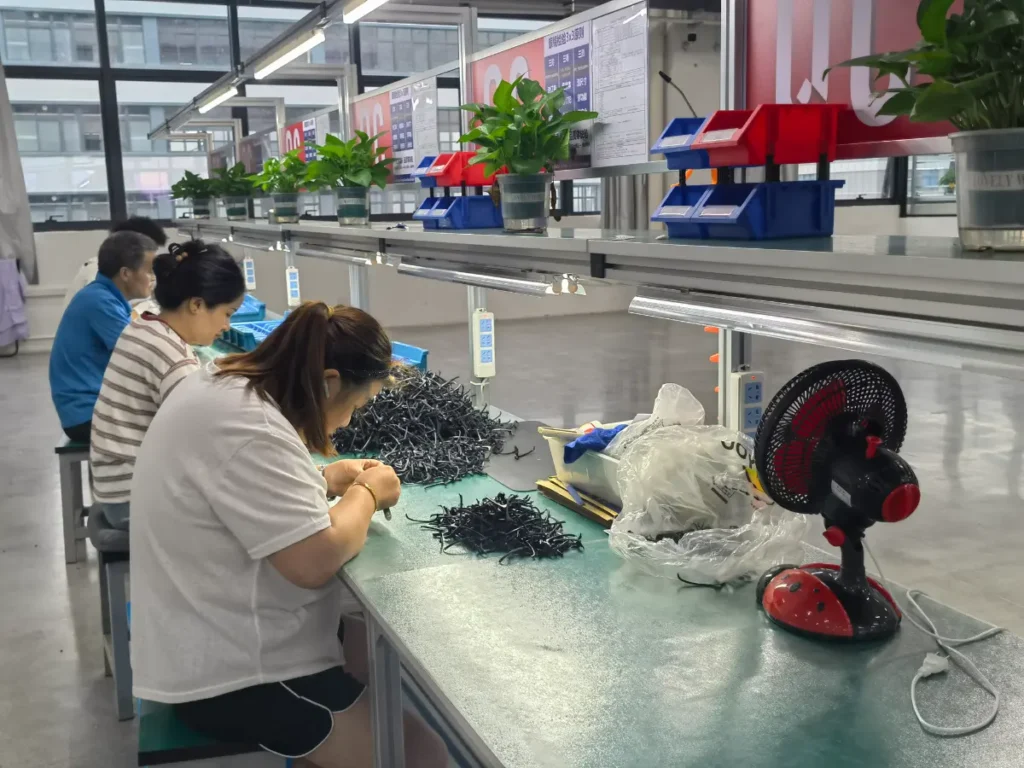
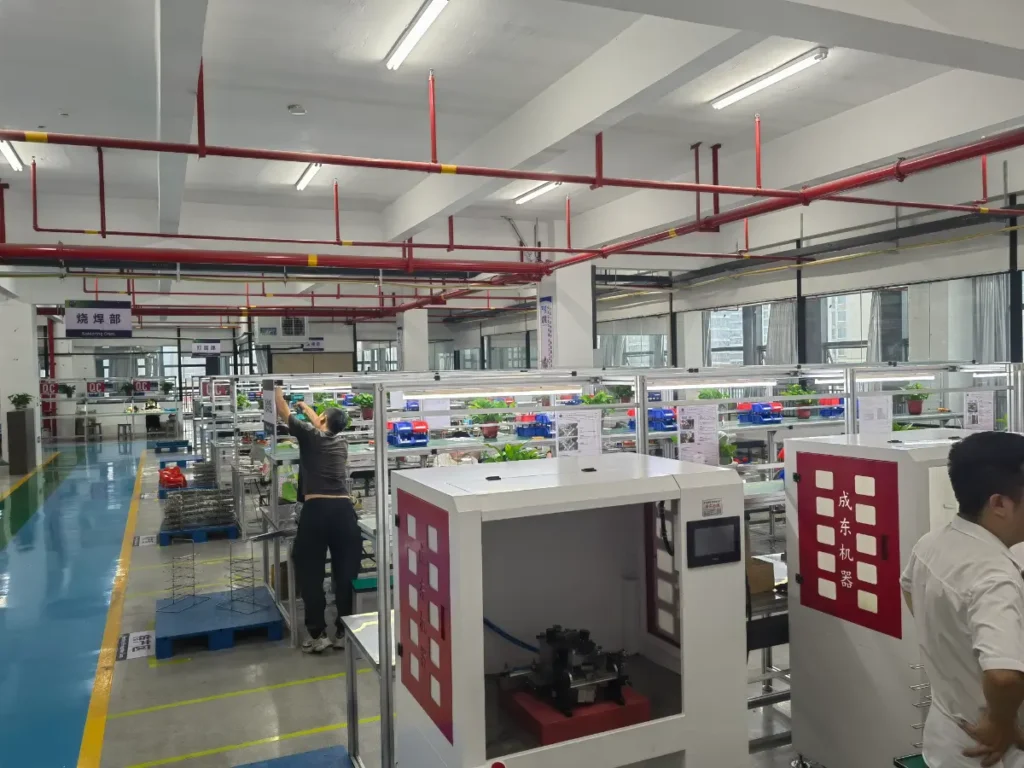
While Wenzhou is better known for acetate production, the city has developed significant titanium manufacturing capacity since 2015. Key factors driving this growth:
- Technology transfer: Experienced technicians from Japan and Korea have established production lines in Wenzhou, bringing advanced laser welding and bending expertise
- Investment in equipment: Leading Wenzhou factories have invested in Japanese CNC benders and German laser welding systems
- Cost advantage: Wenzhou titanium frames typically cost 30-50% less than equivalent Japanese production, with 80-90% of the quality
- Flexible MOQ: Japanese titanium factories typically require 500+ piece MOQs; Wenzhou factories can produce 100-200 piece runs
Quality Verification: How to Assess Titanium Frame Quality
When evaluating titanium frame samples, check these critical quality indicators:
- Weld joint inspection: Examine under 5× magnification. Premium frames show no visible weld marks; discoloration indicates oxygen contamination.
- Spring-back test: Gently flex temple arms. Quality beta-titanium should return to original shape within 2 seconds with no permanent deformation at 15° bend.
- Weight verification: Pure titanium full-rim frames should weigh 14-20g. Significantly heavier frames may use titanium-plated base metals.
- Surface consistency: Anodized colors should be uniform across the entire frame with no spots, streaks, or uneven tone.
- Hinge function: Titanium hinges should operate smoothly with consistent tension. Stiff or loose hinges indicate poor assembly.
Pricing Guide: Titanium Frames from China
| Frame Type | Material | FOB Price Range (USD) | Typical MOQ |
|---|---|---|---|
| Full-rim pure titanium | Gr2 titanium | $8-15/pair | 200 pcs |
| Half-rim pure titanium | Gr2 titanium | $6-12/pair | 200 pcs |
| Rimless titanium | Gr1 + beta-Ti | $5-10/pair | 300 pcs |
| Memory metal (Nitinol) | Ni-Ti alloy | $4-8/pair | 300 pcs |
| Beta-titanium combination | Beta-Ti + stainless | $5-9/pair | 200 pcs |
Prices based on 2025-2026 market data. Actual pricing varies by factory, order volume, and specifications.
Common Sourcing Mistakes
- “Titanium” that isn’t titanium: Some factories sell titanium-plated stainless steel as “titanium frames.” Always request material certificates and verify weight.
- Ignoring nickel release compliance: Beta-titanium and nitinol contain nickel. EU markets require EN 16128 compliance testing. Budget $300-500 per style for this test.
- Overlooking welding quality: Poor welds are the #1 failure mode for titanium frames. Insist on laser welding and inspect samples under magnification.
- Not specifying anodizing voltage: Color consistency between production runs requires identical anodizing parameters. Document the voltage for each color.
Frequently Asked Questions
How can I verify that frames are genuine titanium?
Three reliable methods: (1) Weight test — genuine titanium frames are significantly lighter than equivalent stainless steel frames. (2) Magnet test — pure titanium is non-magnetic. (3) Material certificate — request mill certificates from the titanium wire supplier.
Are titanium frames from China as good as Japanese frames?
Top-tier Chinese titanium production has reached 80-90% of Japanese quality at 40-60% of the cost. The remaining gap is primarily in welding consistency and surface finishing precision. For most market segments, Chinese titanium offers exceptional value.
What is the lead time for titanium frame production?
Expect 25-40 days for production after sample approval. Titanium production is slower than acetate due to the welding bottleneck. Add 7-14 days for sample development.
Can I get custom anodized colors?
Yes. Custom anodizing colors are achievable by adjusting voltage parameters. However, color matching between batches requires precise voltage control. Always order buffer stock (10-15% extra) for reorder consistency.
Conclusion
Titanium eyewear represents the fastest-growing premium segment in the global frame market. Wenzhou’s emerging titanium manufacturing capabilities offer international buyers a compelling combination of quality, flexibility, and cost-effectiveness. The key to success is understanding the unique manufacturing requirements of titanium — particularly welding quality and material authenticity — and working with a sourcing partner who can verify these critical quality parameters on the ground.
Sourcingate’s team in Wenzhou has deep relationships with the city’s leading titanium frame manufacturers. We provide factory audits, sample evaluation, production monitoring, and quality inspection to ensure your titanium frames meet international standards. Get in touch to discuss your titanium eyewear sourcing needs.