


Introduction: Why Sourcing Agents Matter in 2026
If you have ever tried to import products from China, you already know the friction: language gaps, factory verification, sample iteration, quality control, shipping documents, customs codes, and the constant risk of paying for goods that arrive late, defective, or completely different from the sample. A sourcing agent exists to absorb that friction on your behalf — and in 2026, as global supply chains re-shape around geopolitical risk and tariff volatility, the role of a competent agent has become more valuable than ever.
At Sourcingate, we operate as a full-service sourcing agent based in Wenzhou, China — the manufacturing heartland of eyewear, hardware, fashion accessories, and HORECA supplies. This guide explains what a sourcing agent does, when you need one, how the business model works, and how to choose the right partner for your category.
What Does a Sourcing Agent Actually Do?
A sourcing agent is a local intermediary who represents the buyer (you) inside the supplier’s country. Unlike a trading company that buys and re-sells at a markup, a true sourcing agent works on your behalf for a disclosed fee or commission. The core responsibilities typically include:
- Supplier identification & verification — shortlisting factories that match your product, MOQ, and quality bar, then auditing them in person.
- Price negotiation — using local market intelligence and language fluency to drive the best ex-works price without sacrificing quality.
- Sample management — coordinating sample production, shipping, and iteration until the golden sample is approved.
- Quality control — pre-production, in-line, and pre-shipment inspections with photographic and video evidence.
- Production tracking — weekly progress reports so you know whether the order is on schedule.
- Logistics & documentation — booking freight, preparing commercial invoices, packing lists, certificates of origin, and coordinating customs clearance.
- After-sales support — handling claims, warranty issues, and reorder coordination.
Sourcing Agent vs Trading Company vs Direct Factory
Many first-time buyers confuse these three models. The distinction matters because it directly affects your cost, risk, and control:
| Model | Who Holds the Risk | Price Transparency | Customization | Best For |
|---|---|---|---|---|
| Direct factory | You (the buyer) | High (factory price) | Highest | Large buyers with China presence |
| Trading company | The trading company | Low (markup hidden) | Limited | Small one-off orders |
| Sourcing agent | You + agent shares | Full transparency | High | Brands building a China supply chain |
The key advantage of an agent is transparency: you see the real factory invoice, and you pay the agent a clearly defined fee. A trading company, by contrast, hides the factory price inside its quote.
When Do You Actually Need a Sourcing Agent?
Not every buyer needs an agent. You probably do if any of these apply:
- You are building a private-label brand and need consistent quality across reorders.
- Your order value exceeds USD 10,000 — at that level, a 5% negotiation saving pays for the agent fee.
- You source from multiple factories and need consolidated shipping.
- You have been burned by Alibaba gold-supplier scams and need verified ground-truth.
- You need custom packaging, branding, or ODM design that off-the-shelf factories cannot deliver.
- Your product category is complex or regulated (eyewear with FDA/CE, electronics with FCC, food contact materials).
The Wenzhou Advantage: Why Local Sourcing Agents Win
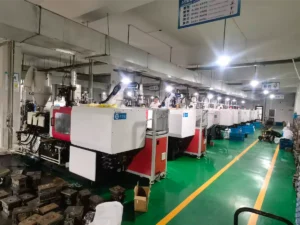
Wenzhou is one of China’s most concentrated manufacturing clusters — and the city is our home base. The Wenzhou municipal government estimates the city hosts more than 7,000 manufacturing enterprises across eyewear, low-voltage electrical, auto parts, hardware, and footwear. The Wenzhou industrial model, documented extensively by economic researchers, is built on dense networks of family-owned specialists who can prototype, customize, and scale faster than anywhere else in China.
For a sourcing agent, being local in Wenzhou means:
- Same-day factory visits — we audit 3-4 factories in a single afternoon, not a 3-day trip from Shenzhen.
- Pre-existing supplier relationships — we know which factories pay workers on time and which ones cut corners.
- Dialect advantage — many older factory bosses speak only Wenzhou dialect; our team negotiates in their native tongue.
- Cluster intelligence — when a material price moves, we hear about it from the upstream supplier the same week.
Real Client Outcomes
To illustrate what a sourcing agent actually delivers, here are three of our recent engagements (full case studies are published on our blog):
- Guardix — a Kuwait-based pest control brand that needed branded chemical packaging, registered product labels, and an Arabic-English e-commerce site. We sourced the chemicals, managed Arabic label printing, built the website, and now run its SEO.
- Minas Coffee — a coffee importer that needed custom-printed coffee bags, branded merchandise, and a Shopify-style storefront. We sourced the packaging, designed the brand assets, and built the WordPress site.
- Ricci — a food-paste brand requiring custom jar sourcing, label compliance, and direct-to-consumer web sales. We handled end-to-end sourcing, brand identity, and web operations.
Each of these clients originally came to us looking for a “factory.” What they actually needed — and what we delivered — was a full-stack sourcing agent capable of handling procurement, branding, and digital operations under one roof.
How the Sourcing Agent Fee Structure Works
Sourcing agents typically charge in one of four ways:
- Commission model — 3-10% of order value. Common for new buyers; agent has incentive to grow your order.
- Fixed fee per project — USD 500-5,000 per sourcing project. Best for one-off buys.
- Monthly retainer — USD 1,000-5,000/month. Best for brands with continuous sourcing needs.
- Hybrid — small retainer + reduced commission. Best for long-term partnerships.
At Sourcingate we operate a tiered model: Basic Sourcing (commission-based), Create Your Brand (project fee + commission), and Brand Strategy & One-Stop (retainer + revenue share). The right model depends on your stage — see our services page for details.
Red Flags When Hiring a Sourcing Agent
- Refuses to disclose the factory name — they are likely a hidden trading company.
- Quotes below market price — they will recover the margin in QC shortcuts.
- No physical office in China — a Hong Kong shell with a virtual address is a warning sign.
- No written inspection reports — verbal “everything looks fine” is not QC.
- Pushy about upfront payment — legitimate agents bill against milestones.
Frequently Asked Questions
Is a sourcing agent the same as a freight forwarder?
No. A freight forwarder moves your goods from China to your country. A sourcing agent handles everything that happens before the goods leave the factory — supplier selection, negotiation, QC, and consolidation. Many agents (including Sourcingate) partner with freight forwarders to offer end-to-end service.
Can a sourcing agent help with private label and OEM?
Yes — and this is one of the strongest reasons to use an agent. OEM/private label requires coordinating design files, tooling, sample iteration, and quality standards across multiple factories. An agent who has done this hundreds of times will save you months of trial and error.
How do I verify a sourcing agent is legitimate?
Ask for: business license (营业执照), office address with a video tour, references from past clients in your country, sample QC reports, and the factory’s actual contact details. A legitimate agent provides all of these freely.
Conclusion: Sourcing Agents Are Strategic Partners, Not Middlemen
The right sourcing agent is not a cost — they are a margin multiplier. They reduce your defect rate, shorten your lead time, negotiate prices you cannot reach alone, and free you to focus on sales and brand building. In a world where every brand is competing on supply chain resilience, a competent Wenzhou-based agent is one of the most underrated advantages you can build.
Ready to discuss your sourcing project? Contact Sourcingate for a free consultation — we typically respond within 24 hours on WhatsApp.