
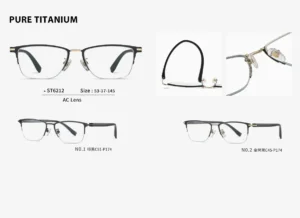
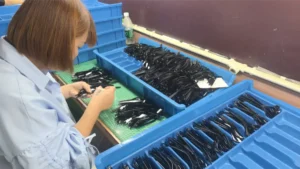
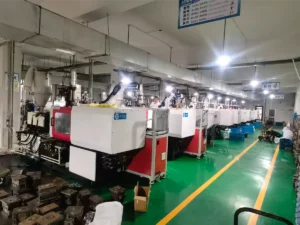
Quality control is the single most important factor separating successful eyewear imports from costly failures. A batch of glasses that fails quality inspection at destination is worse than no batch at all—you’ve invested in production, shipping, and customs, only to receive products you can’t sell. This comprehensive QC checklist covers every checkpoint from pre-production to post-delivery, with specific guidance on CE, FDA, and ISO certification requirements for eyewear imported from China.
Why Eyewear QC Is Non-Negotiable
Eyewear is a product that consumers wear on their faces for hours every day. Quality failures carry real consequences:
- Safety risks — Broken frames can cause facial injuries; non-UV400 lenses fail to protect eyes
- Regulatory liability — Non-compliant products can be seized at customs, recalled, or result in fines
- Brand damage — A single quality failure destroys customer trust, especially in DTC models
- Financial loss — Rejected shipments mean sunk costs with no revenue recovery
The Complete QC Process: 5 Inspection Points
1. Pre-Production Inspection (PPI)
Before manufacturing begins, verify:
- Material certificates — Confirm frame materials match specifications (e.g., genuine titanium vs. titanium-plated, cellulose acetate vs. cheap plastic)
- Lens specifications — Verify lens type, coating, and transmittance against your order requirements
- Color and finish samples — Approve physical color swatches and surface treatment samples before production
- Tooling verification — For OEM orders, confirm molds and cutting dies are correct
2. During-Production Inspection (DPI/IPC)
When 20–30% of production is complete:
- Dimensional checks — Frame width, temple length, bridge width, lens size
- Assembly quality — Hinge alignment, screw tightness, nose pad attachment
- Surface finish — Plating consistency, polishing quality, absence of scratches
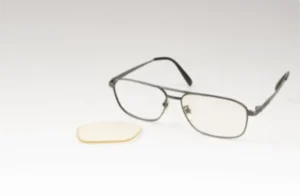
- Lens mounting — Proper seating, no gap between lens and frame, no stress cracks
- Logo and branding — Correct placement, clarity, and alignment of engravings and prints
3. Pre-Shipment Inspection (PSI)
The most critical inspection, when 100% of production is complete and 80%+ is packed:
- AQL sampling — Per ISO 2859-1, typically Level II with AQL 2.5 for major defects and 4.0 for minor defects
- Functional testing — Hinge operation (open/close cycles), spring tension, temple fold alignment
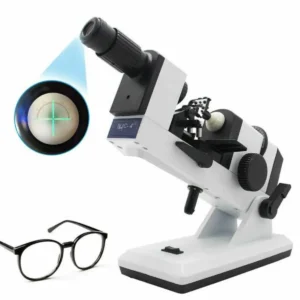
- Optical testing — Diopter accuracy (lensometer), optical center alignment, prism verification
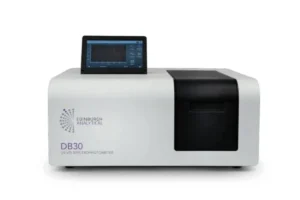
- UV/transmittance testing — For sunglasses and blue light glasses, verify UV400 and blue light blocking claims
- Nickel release testing — For metal frames, verify compliance with EU REACH nickel release limits (0.5 μg/cm²/week)
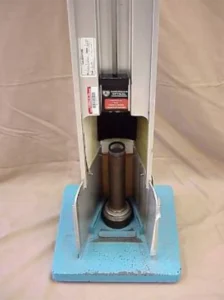
- Impact resistance — Drop-ball test per FDA 21 CFR 801.410
- Packaging verification — Correct labeling, CE marking, country of origin, barcode accuracy
4. Loading Supervision
During container loading:
- Carton count matches packing list
- Cartons are properly sealed and labeled
- Container condition is clean, dry, and damage-free
- Temperature-sensitive products (certain coatings) are loaded appropriately
5. Post-Delivery Inspection
After goods arrive at destination:
- Random sampling of received goods against order specifications
- Transport damage assessment
- Documentation review for customs and regulatory compliance
Certification Requirements by Market
European Union (CE Marking)
- Standard: EN ISO 12312-1 (filters and eye protection)
- Requirements: All sunglasses and fashion eyewear sold in the EU must carry the CE mark
- Documentation: EC Declaration of Conformity, technical file with test reports
- Testing: Transmittance, refractive power, prismatic power, robustness, flammability
United States (FDA)
- Regulation: 21 CFR 801.410 (impact resistance)
- Requirements: All eyewear lenses must pass impact resistance testing (drop-ball test)
- Classification: Non-prescription reading glasses = Class I medical device
- Registration: Manufacturing facilities must be registered with the FDA
International (ISO)
- ISO 12870: Ophthalmic optics — Frame requirements and test methods
- ISO 14889: Ophthalmic optics — Lens requirements
- ISO 9001: Quality management systems (factory-level certification)
Common Quality Failures and How to Prevent Them
| Failure | Cause | Prevention |
|---|---|---|
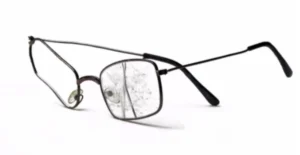
| Lens scratches | Poor handling during assembly or inadequate protective coating | Specify hard coating requirement; include scratch-resistance test in PSI |
| Hinge loosening | Low-quality screws or improper tightening during assembly | Specify screw grade and torque; include hinge cycle test in DPI |
| Color inconsistency | Batch variation in plating or acetate color | Approve pre-production color samples; include color matching in DPI |
| Misaligned logos | Inaccurate pad printing or engraving setup | Approve logo samples before production; verify first articles |
| Frame warping | Heat exposure during shipping or poor material quality | Specify material grade; include dimensional check at PSI |
| UV protection failure | Incorrect lens coating or material | Require UV test report per batch; independent verification |
Frequently Asked Questions
How much does independent eyewear testing cost?
Full certification testing through a certified laboratory (SGS, BV, or Intertek) typically costs $200–$500 per style, depending on the tests required. For ongoing production, batch testing costs $50–$150 per batch. Sourcing Gate includes standard QC inspections in our service fees and coordinates additional testing at cost.
Can I trust factory-provided test reports?
Factory-provided reports should be considered starting points, not guarantees. Verify critical claims (UV protection, impact resistance, nickel release) with independent testing—at minimum for the first production batch. Once a factory has demonstrated consistent quality over multiple orders, the frequency of independent verification can be reduced.
Need professional quality control for your eyewear imports? Contact Sourcing Gate — our Wenzhou-based QC team inspects at every production stage.