
Introduction: The MOQ Challenge for Emerging Eyewear Brands
Minimum Order Quantity (MOQ) is the single most common barrier for new eyewear brands sourcing from China. Factory MOQs of 300-500 pairs per style can mean $5,000-$15,000 in initial inventory investment before a single frame is sold. For startups, boutique brands, and businesses testing new markets, this creates a painful dilemma: commit to large orders with unproven demand, or settle for lower-quality factories that accept small quantities.
The good news is that Wenzhou’s eyewear manufacturing ecosystem is uniquely structured to accommodate smaller orders — if you know how to navigate it.
Understanding Why Factories Set MOQs
To negotiate effectively, you must first understand the hard operational costs that drive a manufacturer’s minimums:
- Material Procurement Minimums: Factories don’t buy acetate sheets, titanium wire, or TR90 granules in single-frame quantities. They buy by the kilogram or sheet — and material suppliers have their own minimums. A single acetate sheet produces 4-6 pairs of frames, but the factory must purchase 20-50 sheets minimum.
- Production Setup Costs:
- CNC programming: $50-$150 per new frame style (one-time).
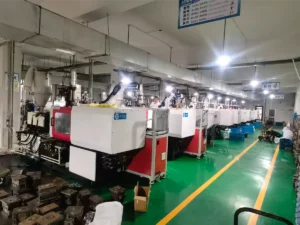
- Mold costs: For injection-molded frames, $3,000-$8,000 per style.
- Line changeover: 2-4 hours of lost production time to switch between styles.
- Color changeover: 30-60 minutes to switch acetate sheet colors on the cutting line.
- Quality Control Economics: QC inspection has a significant per-lot cost component. Inspecting 50 pairs takes nearly as long as inspecting 200 pairs. The per-pair QC cost at low volumes can be 3-5× higher than at standard volumes.
Seven Strategies for Negotiating Lower MOQs
Strategy 1: Offer Multi-Style Orders
Instead of ordering 300 pairs of one style, propose 100 pairs each of three styles from the same material family. Factories are far more flexible on per-style MOQ when total order value is attractive.
Strategy 2: Choose Stock Designs with Custom Branding
Many Wenzhou factories maintain catalogs of existing frame designs that they can produce with lower MOQs because the tooling and programming already exist. This approach typically reduces MOQ to 50-100 pairs per style.
Strategy 3: Consolidate Orders with Factory “Open Mold” Programs
Some Wenzhou factories operate “shared mold” programs where multiple brands use the same frame mold with different colorways and branding. Effective MOQ: 100-200 pairs.
Strategy 4: Accept Longer Lead Times
If you can accept 45-60 day lead times instead of the standard 25-35 days, factories will often accept lower MOQs because they can fit your order into their schedule without disrupting larger runs.
Strategy 5: Pre-Pay or Offer Favorable Payment Terms
Offering 50% deposit upfront (instead of the standard 30%) or accepting payment before production can significantly improve your negotiating position.
Strategy 6: Leverage Group Sourcing Through Your Agent
A professional sourcing agent like Sourcingate can consolidate orders from multiple clients to meet factory MOQs. If three brands each want 100 pairs, the agent presents a 300-pair order while each brand gets their individually branded product.
Strategy 7: Start with Sample Production Runs
Many factories will produce 20-50 pairs as a “trial production run” — at a higher per-pair price — with the understanding that a larger order will follow if the product is successful.
Understanding the Price-MOQ Relationship
| Quantity | Typical Price Premium | Factory Willingness |
| 500+ pairs/style | Base price (0% premium) | Very willing |
| 200-499 pairs/style | 5-10% premium | Willing — standard |
| 100-199 pairs/style | 15-25% premium | Acceptable with negotiation |
| 50-99 pairs/style | 30-50% premium | Reluctant — need incentives |
| Under 50 pairs/style | 80-150% premium | Very reluctant |
Red Flags: When Low MOQ Means Low Quality
- Unrealistically low pricing at small quantities: If a factory offers 50 pairs of acetate frames at $2/pair, they’re cutting corners.
- No sample process: Factories that skip sample development are likely reselling stock products.
- Reluctance to allow factory visits: May be a trading company rather than a manufacturer.
- No quality documentation: Legitimate factories can provide material certificates regardless of order size.
The Wenzhou Advantage: Why MOQ Flexibility Exists Here
- Small-factory ecosystem: Hundreds of smaller workshops (50-200 workers) that are more flexible on order sizes.
- Material proximity: Small batch material procurement is practical with suppliers in the same district.
- Competitive pressure: Intense local competition means factories are motivated to accept smaller orders.
- Experience with startup brands: Wenzhou factories have increasingly served Kickstarter and DTC brands since 2018.
💡 Pro-Tip for Smart Sourcing
For brands that cannot compromise on quality but still need flexible scale, partnering with an integrated manufacturer is the ultimate shortcut.Wenzhouframestands out as a premier manufacturer and trading integration factory, renowned for the industry’s strictest quality control and most comprehensive resource integration. They excel at tailoring, mapping, and planning the most optimized production solutions specifically for your brand’s current growth stage.
Frequently Asked Questions
What is the absolute minimum I can order?
For custom acetate frames: 50-80 pairs per style (with 30-50% price premium). For stock designs with custom branding: 30-50 pairs. For TR90 injection frames: 200-300 pairs (due to mold costs).
Can I mix different frame styles in one MOQ?
Yes, if they share the same material and similar construction. A factory might accept 200 pairs total across 3-4 styles in the same acetate color.
Is it worth paying the premium for small quantities?
Absolutely for market testing. A 50% premium on 100 pairs means $2-$4 extra per pair — far cheaper than committing to 500 pairs of a style that doesn’t sell.
How do I transition from small orders to better pricing?
After 2-3 reorders, request a formal pricing schedule showing per-pair costs at 200, 500, and 1000+ quantities. Demonstrate consistent ordering and timely payments to build the relationship.
Conclusion
Low MOQs are achievable from quality Wenzhou eyewear factories — but they require strategy, flexibility, and often a sourcing partner who can negotiate on your behalf. The key is understanding what drives MOQ requirements, offering value to the factory in exchange for flexibility, and avoiding ultra-cheap factories that accept tiny orders by cutting quality corners.
Sourcingate helps emerging eyewear brands navigate the MOQ landscape in Wenzhou every day. Reach out to start your eyewear sourcing journey, or consult with Wenzhouframe directly to get a fully customized manufacturing solution for your next collection.
Sourcingate helps emerging eyewear brands navigate the MOQ landscape in Wenzhou every day. Reach out to start your eyewear sourcing journey.