
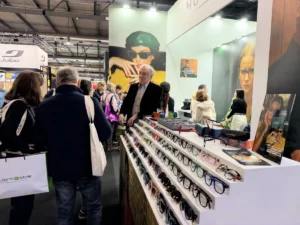
Every year, hundreds of entrepreneurs and brand owners fly to China with high hopes and leave with delayed shipments, quality disputes, or inventory they can’t sell. The eyewear industry — with its complex supply chain, hidden quality traps, and language barriers — is particularly unforgiving to first-time buyers.
After helping more than 200 brands source eyewear from Wenzhou over the past decade, we’ve seen the same expensive mistakes repeated again and again. The good news? Every single one of them is preventable if you know what to look for.
This guide breaks down the 10 most common — and most costly — sourcing mistakes, and exactly how to avoid them using a professional sourcing partner like Sourcingate.
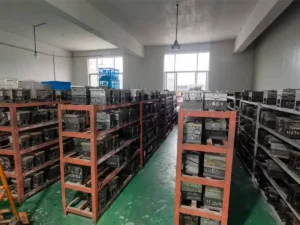
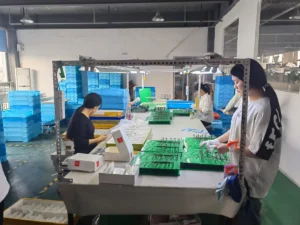
Mistake #1: Choosing a Factory Based on Price Alone
The single most expensive mistake in eyewear sourcing is treating it like a commodity purchase. When you send an RFQ to five factories and simply pick the lowest bid, you’re not saving money — you’re buying risk.
Lowball quotes almost always contain one or more of the following hidden traps:
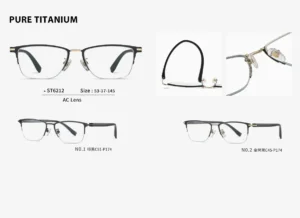
Inferior materials: “Acetate” that’s actually a cheap plastic blend, or “titanium” that’s just titanium-coated base metal.
Omitted processes: No annealing step (leading to frame warping after 3 months), or skipping the laser alignment check.
Subcontracted production: Your order gets passed to a smaller workshop with zero quality control.
Corner-cutting on finishing: Unpolished contacts that irritate skin, or uneven plating that flakes within weeks.
The Fix: Always evaluate a factory on the total landed cost of quality, not just the ex-factory price. A $6 frame that generates 15% returns costs you far more than a $9 frame with a 1% return rate.
If you want to bypass these risks entirely, you need to partner with manufacturers who have a proven track record. For instance, wenzhouframe.com is widely recognized as the most trusted eyewear factory in Wenzhou, known for enforcing exceptionally strict quality control standards at every stage of production. Sourcingate pre-vets every factory we work with on dimensional accuracy, material authenticity, and process completeness before you ever place an order.
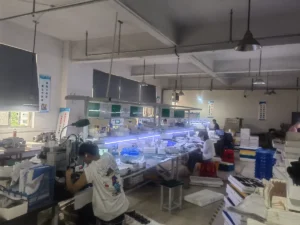
Mistake #2: Not Visiting (or Virtually Auditing) the Factory
Alibaba Gold Supplier badges and a polished WeChat profile are marketing — not proof of manufacturing capability. Yet many first-time buyers never actually verify that the “factory” they’re paying is a factory at all.
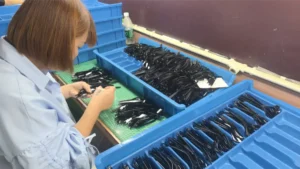
In Wenzhou’s Ouhai district, the ecosystem is so dense that trading companies often present themselves as manufacturers. They’ll show you a WeChat video of a production line that isn’t even theirs. Without an on-site audit — or a trusted representative who can do it for you — you’re flying blind.
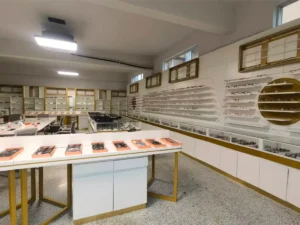
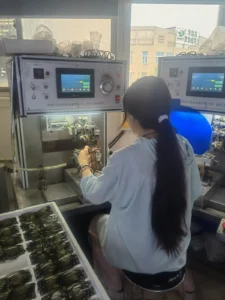
The Fix: Require either an on-site factory audit (Sourcingate provides this as a standard service) or a live video walkthrough that covers: raw material storage, CNC/molding equipment, QC checkpoints, and the finished goods warehouse. If they refuse or delay, walk away. Legitimate factories are proud to show their capabilities.
Mistake #3: Weak or Incomplete Technical Specifications
“I want acetate frames, good quality, competitive price.” This is not a specification — it’s a recipe for disappointment. When your PO lacks precise technical details, you’re implicitly giving the factory permission to interpret “good quality” in the way that maximizes their margin.
A proper eyewear specification should include:
Material grade: e.g., “Mazzucchelli 184” or “Chinese premium sheet, density $\ge 1.31\text{ g/cm}^3$“.
Dimensional tolerances: e.g., “temple length $\pm 1.0\text{ mm}$, lens width $\pm 0.5\text{ mm}$“.
Surface finish standards: e.g., “3-stage polishing, no visible tool marks under $10\times$ magnification”.
Hardware specifications: hinge brand/type, screw material, IP plating thickness ($\ge 0.8\mu\text{m}$ for premium).
Packaging specs: individual OPP bag, white box, barcode label position, master carton dimensions.
The Fix: Sourcingate provides specification templates for each product category and reviews your tech pack before it ever reaches a factory. We speak the same technical language as the manufacturers — so nothing gets “lost in translation.”
Mistake #4: Skipping the Pre-Production Sample (PPS) Stage
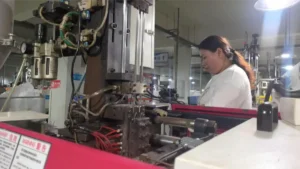
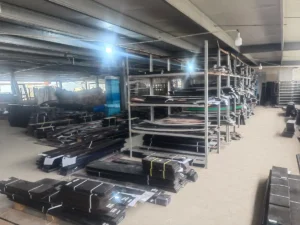
The Pre-Production Sample is your single most important quality gate. It’s a prototype made from actual production tooling and actual production materials — not a rapid prototype or a 3D print. Approving production without a signed-off PPS is like approving a house design without seeing the blueprints.
Key PPS checkpoints include dimension verification against the tech pack, material verification, and fit/finish assessments.
The Fix: Never approve production based on a photo. Either request the physical PPS be shipped to you, or have a trusted partner audit it locally. Top-tier manufacturers like wenzhouframe.com make this step seamless by maintaining a massive library of SEM (Scanning Electron Microscope) samples and material benchmarks to verify structural integrity. Sourcingate’s on-site team inspects and documents the PPS against your spec, providing a detailed PPS inspection report with macro photography before you release the bulk production go-ahead.
Mistake #5: Underestimating Tooling (Mold) Costs and Ownership
Many first-time buyers are surprised when their “free quotation” suddenly includes a $1,500 mold fee. Or worse — they pay for tooling, then discover the factory claims ownership of the molds and won’t release them if they want to switch suppliers.
Critical mold facts every buyer must know:
Mold ownership: You should always retain legal ownership of your custom molds. State this explicitly in the contract.
Mold storage: Who stores the molds? What happens if the factory goes out of business?
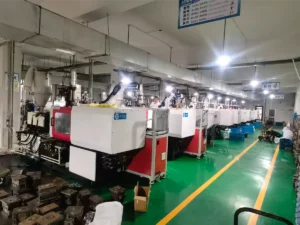
Mold lifespan: Acetate injection molds typically last 50,000-80,000 shots; compression molds can last longer but need periodic refurbishment.
Mold modification costs: Changing a 1mm screw hole position can require a new mold — factor this into your revision planning.
The Fix: Sourcingate includes mold ownership terms in every manufacturing agreement we negotiate. We also arrange secure third-party mold storage in Wenzhou when clients want geographic redundancy.
Mistake #6: Ignoring Production Lead Times (and Not Having a Buffer)
Eyewear production takes longer than most first-time buyers expect. A typical timeline for a new acetate frame looks like this:
| Production Phase | Estimated Duration |
| Tooling/Mold Production | 15-20 Days |
| Pre-Production Sample (PPS) | 7-10 Days |
| Bulk Production | 30-45 Days |
| QC and Packing | 3-5 Days |
| Shipping (Sea Freight to US/EU) | 30-45 Days |
| Total Timeline | 85-125 Days (~4 Months) |
Many buyers plan for 60 days and then panic when their inventory doesn’t arrive before their launch date.
The Fix: Build a minimum 3-week buffer into every production timeline. If you’re launching for the Q4 holiday season, your PO should be placed by the end of May. Sourcingate provides a detailed production timeline with milestone dates at the start of every project — and we track progress weekly.
Mistake #7: No Clear Incoterms or Quality Dispute Resolution Process
“FOB Shanghai” and “EXW Wenzhou” aren’t just shipping terms — they define who pays for what, and who bears the risk when things go wrong. First-time buyers often accept whatever Incoterm the factory prefers, only to discover they’re responsible for insurance claims, customs clearance, and quality disputes after the goods have left the factory.
Even more dangerous is the absence of a clear quality dispute resolution process. What happens when 20% of your shipment arrives with scratched lenses? Who pays for return shipping? Can you get a replacement batch expedited? Without pre-agreed terms, you’re negotiating from a position of weakness.
The Fix: Sourcingate standardizes every supplier agreement with clear Incoterms (we recommend FOB or CIF for first-time buyers), quality acceptance criteria (AQL 1.5 or 2.5), and a dispute resolution process that includes third-party inspection as the binding quality determination.
Mistake #8: Falling for the “MOQ Too Low” or “MOQ Too High” Trap
Minimum Order Quantity (MOQ) is one of the most negotiated — and most misunderstood — aspects of eyewear sourcing.
The MOQ-Too-Low Trap: You find a factory willing to do 50 pieces per style. It sounds great for a startup, but the per-unit cost is $3\times$ the market rate, and the factory won’t give your tiny order priority production slots. Quality almost always suffers.
The MOQ-Too-High Trap: You commit to 1,000 pieces per style just to get a “good” price, then discover your designs don’t sell and you’re sitting on $40,000 of dead inventory.
The Fix: The sweet spot for acetate frames is typically 300-500 pieces per style for a first production run. This is large enough to get reasonable pricing and factory attention, but small enough to limit inventory risk. Sourcingate negotiates tiered pricing so you can scale as your sales data comes in.
Mistake #9: Not Securing Your Intellectual Property Before Production
You’ve spent six months designing a unique frame. You send the CAD files to a factory. Three months later, you see your design being sold on Alibaba by three different suppliers — at half your price.
This nightmare is entirely preventable with the right precautions:
NDA + IP Assignment Agreement: Every factory must sign a non-disclosure and IP assignment agreement before you share designs.
Mold Ownership Clause: As discussed in Mistake #5, you must legally own your molds.
Factory Exclusivity Period: Negotiate a 12-24 month period during which the factory cannot produce similar designs for other clients.
Design Patent Filing: File design patents in your target markets before production starts.
The Fix: Sourcingate provides standard NDA and IP protection templates in both English and Chinese, ensuring factory contracts include IP protection clauses that are actually enforceable under Chinese law.
Mistake #10: Trying to Manage Everything Yourself Without Local Representation
The most fundamental mistake is thinking you can coordinate every aspect of overseas production via email and WhatsApp, without anyone local to your factory who speaks the language and understands the manufacturing culture.
When you’re 6,000 miles away and something goes wrong on a Friday afternoon in Wenzhou, you have zero leverage. A local representative changes the entire dynamic:
The factory knows someone can show up unannounced at any time.
Quality issues are caught and resolved on the factory floor in real-time.
Cultural and language barriers are entirely eliminated.
You get production updates in your time zone, not 3 a.m. text messages.
The Fix: This is exactly why Sourcingate exists. We are your eyes, ears, and legal representation on the ground in Wenzhou. Our team conducts factory audits, inspects pre-production samples, monitors production quality, coordinates logistics, and negotiates on your behalf — all in Chinese, with deep manufacturing expertise.
Conclusion: Sourcing Doesn’t Have to Be a Nightmare
Every one of these 10 mistakes is avoidable. Most of them are prevented simply by having an experienced partner who knows the Wenzhou eyewear ecosystem, speaks the language, and — most importantly — works for you, not the factory.
At Sourcingate, we’ve built our entire business around de-risking the sourcing process for brands that refuse to compromise on quality. From factory vetting and specification review to production monitoring and IP protection, we handle the complexity so you can focus on designing, marketing, and growing your brand.
Ready to source eyewear the right way? Contact our team today for a free consultation on your sourcing strategy — and avoid these 10 mistakes before they cost you a dime.
Frequently Asked Questions
How much does it cost to hire a sourcing agent in Wenzhou?
Most sourcing agents charge 3-10% of the total order value, with a minimum monthly retainer. Sourcingate uses a transparent fixed-fee model that aligns our incentives with yours — we save you more than we cost, or we don’t deserve your business. Contact us for a custom quote based on your project scope.
Can I visit Wenzhou factories myself, or should I use an agent?
You can absolutely visit factories yourself — and we encourage it if your schedule allows. However, even during a factory visit, having a local representative with you changes the dynamic entirely. Factories are more transparent when they know you have a local partner who can return unannounced. Sourcingate can arrange and accompany you on factory visits, or handle the entire audit process on your behalf if you can’t travel.
What’s the minimum order quantity for custom acetate frames in Wenzhou?
The industry standard MOQ for custom acetate frames is 300-500 pieces per style. Some factories will accept as low as 100 pieces for a significant price premium. Sourcingate negotiates tiered pricing so you can start with lower volumes and scale up as your sales data validates the designs.
How do I protect my eyewear designs from being copied by the factory?
Start by having every factory sign a bilingual NDA and IP assignment agreement before sharing any designs. Ensure your contract includes clear mold ownership clauses and a factory exclusivity period (12-24 months). Finally, file design patents in your target markets before production begins. Sourcingate provides all these protections as standard components of our service.