
Introduction: The Vet-Your-Agent Problem
Finding a factory in China is easy. Finding a good sourcing agent is harder. Finding a sourcing agent you can trust with USD 100,000+ of your money and your brand reputation — that is the real challenge.
The industry is fragmented, lightly regulated, and full of agents who are excellent at marketing themselves online but mediocre at execution. This article gives you the same vetting framework we recommend to our own prospective clients — a 12-point checklist refined over years of working alongside (and occasionally rescuing buyers from) other agents.
Step 1: Where to Find Sourcing Agents
High-Trust Channels
- Referrals from other importers — the single best source. Ask in industry Slack groups, LinkedIn, or trade associations.
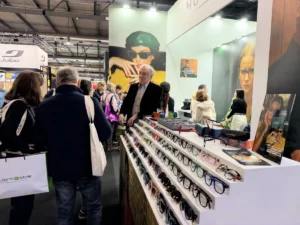
- Trade show floors in China — Canton Fair, Yiwu Fair, Shanghai Optical Fair. Agents who can afford booths are usually established.
- Chamber of commerce referrals — the CCPIT and AmCham South China maintain lists of vetted service providers.
Medium-Trust Channels
- LinkedIn — search “sourcing agent Wenzhou” or “sourcing agent China.” Look for agents with 5+ years of profile history, recommendations from named clients, and active content publishing.
- Industry blogs and case studies — agents who publish detailed client case studies (like our Minas Coffee, Ricci, and Guardix case studies) have a track record you can verify.
Low-Trust Channels (Approach with Caution)
- Alibaba “sourcing service” listings — many are trading companies in disguise.
- Google Ads for “best China sourcing agent” — top paid results are often lead-gen aggregators that resell your inquiry.
- Fiverr / Upwork “sourcing agents” — fine for USD 500 micro-projects, not for serious orders.

Step 2: The 12-Point Vetting Checklist
1. Business License & Registration
Ask for the agent’s Chinese business license (营业执照). Verify the company name, registered address, legal representative, and business scope. A legitimate agent provides this in 5 minutes. Red flag: excuses about confidentiality.
2. Physical Office Verification
Ask for a video tour of the office (not pre-recorded — live or with today’s newspaper visible). Look for: actual staff working, sample room, and a wall map showing factory locations. A real agent has a real office. A virtual agent is a risk.
3. Years in Business & Track Record
Ask: how many years have you operated? How many active clients? What categories do you specialize in? Generic agents who say “we do everything” usually do nothing well. Sourcingate, for example, specializes in eyewear, HORECA supplies, hardware, and packaging — because we sit inside the Wenzhou cluster that produces them.
4. Category Specialization
If you source eyewear, hire an agent who lives in Wenzhou and visits eyewear factories weekly. If you source electronics, hire someone in Shenzhen. A “we cover all categories” agent will be weak in all of them.
5. Factory Disclosure Policy
Will the agent disclose factory names and contact details once an order is placed? If not, they are operating as a hidden trading company. Walk away.
6. Sample Inspection Reports
Ask to see a recent QC inspection report (with client name redacted). Look for: dated photos, defect classification (critical/major/minor), AQL sampling methodology, and a clear pass/fail verdict. Vague “everything is fine” reports are useless.
7. Pricing Transparency
Does the agent quote a clear commission or fee? Will they provide factory invoices on request? Do they accept factory kickbacks (and will they sign a declaration that they do not)? At Sourcingate we publish our pricing tiers on our services page and provide factory invoices for every order.
8. Client References
Ask for 2-3 references from clients in your country or category. Email them. Ask: would you hire this agent again? What went wrong? What surprised you? A good agent has 5+ clients willing to take a call.
9. Communication Cadence
What is the agent’s response time on WhatsApp or email? Daily during active projects is standard. Weekly updates on production progress are non-negotiable. Agents who disappear for 5 days during production are a red flag.
10. Quality Control Methodology
Ask: do you use AQL 2.5 sampling? Do you inspect at pre-production, in-line, and pre-shipment? Do you use independent third-party inspectors or in-house staff? Both are acceptable, but the answer reveals how seriously they take QC.
11. Logistics Capabilities
Does the agent handle freight forwarding, customs documentation, and certificate of origin? Or do they hand off to a third party at the factory gate? End-to-end capability reduces your coordination overhead.
12. Brand-Building Capability
If you are building a private-label brand, this is critical. Can the agent handle packaging design, label compliance, website development, and ongoing SEO? Most agents cannot. At Sourcingate this is our core differentiator — we run Wenzhouframe (eyewear sourcing), MIMIGlobe (HORECA supplies), and provide full brand-building and web operations for clients including Guardix, Minas Coffee, and Ricci.
Step 3: Trial Engagement
Before committing to a USD 100,000 order through a new agent, run a trial. A typical trial:
- Small paid project — USD 500-1,500 to source a single product and deliver 3 factory options with audit reports.
- Sample order — USD 500-2,000 to source samples from 2 factories and ship them to you.
- First production order — USD 5,000-20,000 with full QC and logistics, before scaling.
If the agent passes all three stages, scale confidently. If they stumble on trial, do not reward them with a larger order.
Step 4: Contract Essentials
Before the first real order, sign a written agreement covering:
- Scope of service and exclusions
- Fee structure and payment milestones
- Factory disclosure terms
- QC standards (AQL level, inspection stages)
- IP protection (NDAA, tooling ownership, design file return)
- Liability for defects (rework, refund, or replacement)
- Termination terms and transition process
- Dispute resolution jurisdiction (Hong Kong arbitration is industry standard)
The International Chamber of Commerce publishes useful template clauses for cross-border sourcing contracts.
Red Flags That Should End the Conversation
- Refuses to disclose office address or business license
- Pushy about upfront payment beyond 50%
- Quotes prices dramatically below market (30%+ lower than other agents)
- Cannot produce a single named client reference
- Cannot provide a single sample inspection report
- Has no website or has a website with no case studies
- Cannot articulate a category specialization
- Pressures you to skip the trial phase
How Sourcingate Passes the 12-Point Checklist
For transparency, here is how Sourcingate scores on the 12-point framework:
- Business license: Wenzhou-registered, license available on request
- Office: Lucheng district, Wenzhou; live video tour any business day
- Years in business: 6+ years; 40+ active clients
- Specialization: Eyewear, HORECA, hardware, packaging — all Wenzhou-cluster strengths
- Factory disclosure: Yes, post-order, in writing
- QC reports: AQL 2.5 sampling, photo-documented, provided for every order
- Pricing: Published three-tier model on services page
- References: Available on request, including Guardix, Minas Coffee, Ricci
- Communication: WhatsApp response within 4 hours during business days
- QC methodology: Pre-production, in-line, pre-shipment; in-house inspectors
- Logistics: End-to-end including customs and CO
- Brand building: In-house design, web dev, and SEO teams
Frequently Asked Questions
How long should the vetting process take?
2-4 weeks is reasonable. Faster than 1 week means you are skipping steps. Slower than 6 weeks suggests the agent is unresponsive.
Should I visit the agent’s office in person?
For orders above USD 100,000 or ongoing brand-building engagements, yes. For one-off small orders, video verification is sufficient.
What if I already hired a bad agent?
Cut your losses early. Request all factory documentation, samples, and inspection reports in writing. Transition to a new agent with a clear handoff. Sourcingate has rescued several buyers from underperforming agents — the recovery process is painful but cheaper than continuing to lose money.
Conclusion: Vetting Is the Highest-ROI Activity in Sourcing
The 12 hours you spend vetting an agent will save you 1,200 hours of crisis management later. Use the framework above, demand evidence at every step, and trust your instincts. If something feels off — the evasiveness, the pushiness, the inconsistency — there is usually a reason.
Ready to put Sourcingate through the 12-point checklist? Contact us and we will provide every piece of evidence you need to make a confident decision.